
- DHT22Room temperature and humidity, read through the ventsNot modeled
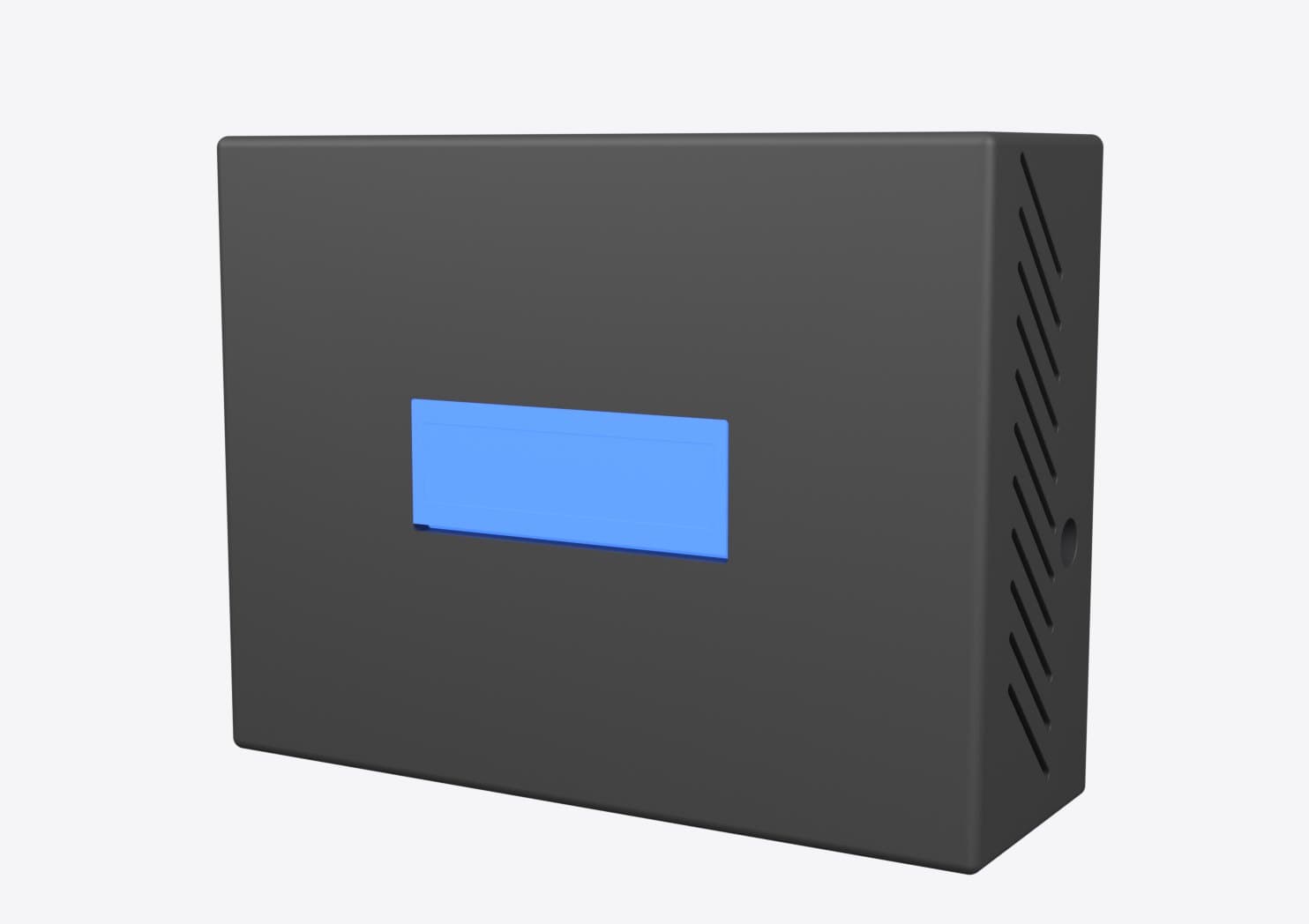
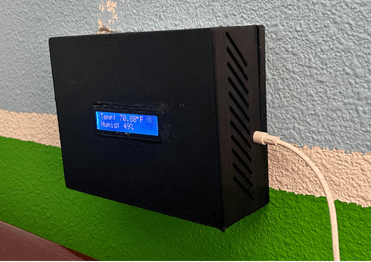
- 16×2 I²C LCDSystem state at the wall; held by the press-fit windowIn the CAD
- HC-05Bluetooth stream of temperature, AC state and timingNot modeled
- MeasureDHT22 reads the room
- DecideArduino applies temperature and time logic
- CommandSG90 moves 0° → 35° → 70°
- RespondAC switch toggles; the room temperature follows
Independent project
Smart Climate Control MonitorHow do you add intelligent control to a 20-year-old AC system without modifying its internal wiring?
A wall-mounted retrofit that physically flips the existing switch, designed in SolidWorks and built to cut energy use, not just add convenience.
- lower observed energy cost in the tested setup
- ≈ 25%
- Measured
The external retrofit
The solution had to sense the room, physically operate the existing switch, and add intelligence without opening the wall.
Enter the cross-section
The enclosure had to be designed around motion, clearance, sensing, mounting, feedback, and manufacturing.
Servo becomes the interface
The servo converts digital commands into repeatable mechanical motion at the existing rocker switch.
Calibrated positions from the build. The rocker switch itself is not part of the CAD, so the arc shows the horn travel only.
Reveal the controller
The Arduino coordinates sensing, timing, and actuation inside a mechanically constrained package.
Its place sets the enclosure volume, the wiring access and the assembly order, which is why it is here, not because the electronics are the subject.
Sense and communicate
The DHT22 measures the local environment. The LCD gives the user immediate system-state feedback. Bluetooth makes the behavior measurable.
The DHT22 and HC-05 are not modeled in the CAD; the LCD, its contrast potentiometer and the breadboard are.
Design the enclosure
The enclosure was built around the hardware envelopes and the assembly sequence, not around an arbitrary rectangular box.
- PETG layers, three perimeters
- 0.2 mm
- Print settings
- clearance holes for #8 drywall screws
- 4.8 mm
- Design
Press-fit LCD window, self-threading M3 bosses, bridging-safe vents and minimal supports.
Close the control loop
Measure temperature. Decide when cooling is needed. Command the servo. Observe the room respond.
Return to the wall
The design only matters if the mechanism works where the old switch actually lives.
Measure performance
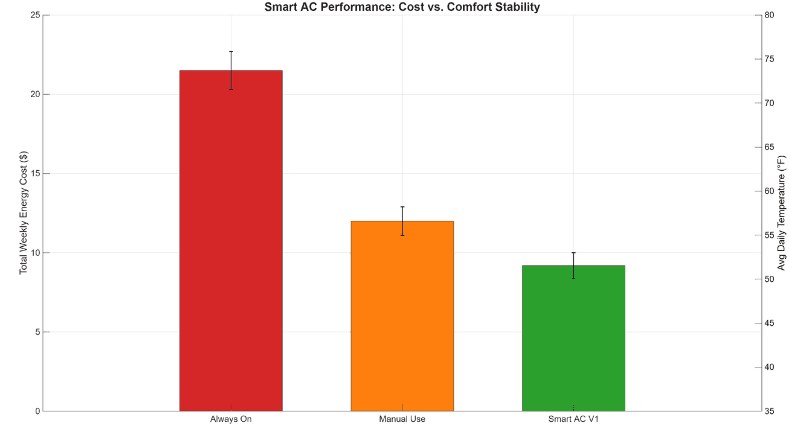
The controller did not just move the switch. It logged temperature, AC state, actuation timing, and energy-cost data every 10 seconds.
Result and limitation
In the tested setup, the controller reduced observed energy cost by approximately 25% and reduced the daily temperature swing from 4.2°C to 3.3°C.
- lower observed energy cost
- ≈ 25%
- Measured
- daily temperature swing
- 4.2 → 3.3 °C
- Measured
Results from the tested setup. Retrofit without modifying internal wiring.